NATIONAL SECURITY ISSUES
-
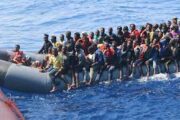
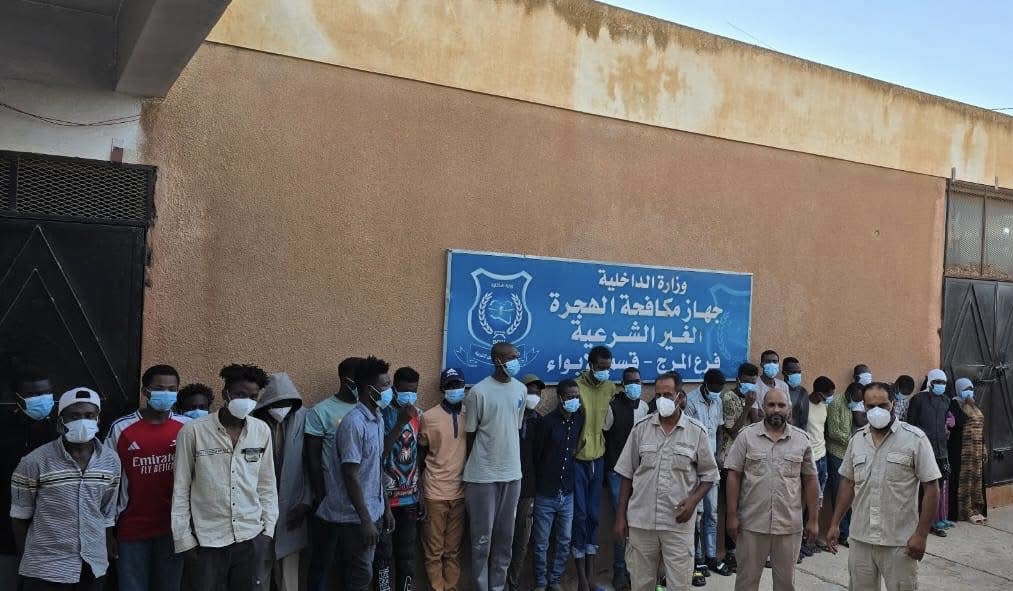
The Anti-Illegal Immigration Agency in Eastern Libya has relocated 30 irregular migrants of Sudanese, Chadian, and Nigerian nationalities from the Al-Marj city to the Qanfouda shelter center in Benghazi. It was found that most of the relocated individuals were suffering from epidemic diseases, in addition to two cases of women infected with the AIDS virus. Their deportation procedures to their home countries will be completed later, according to the Agency.
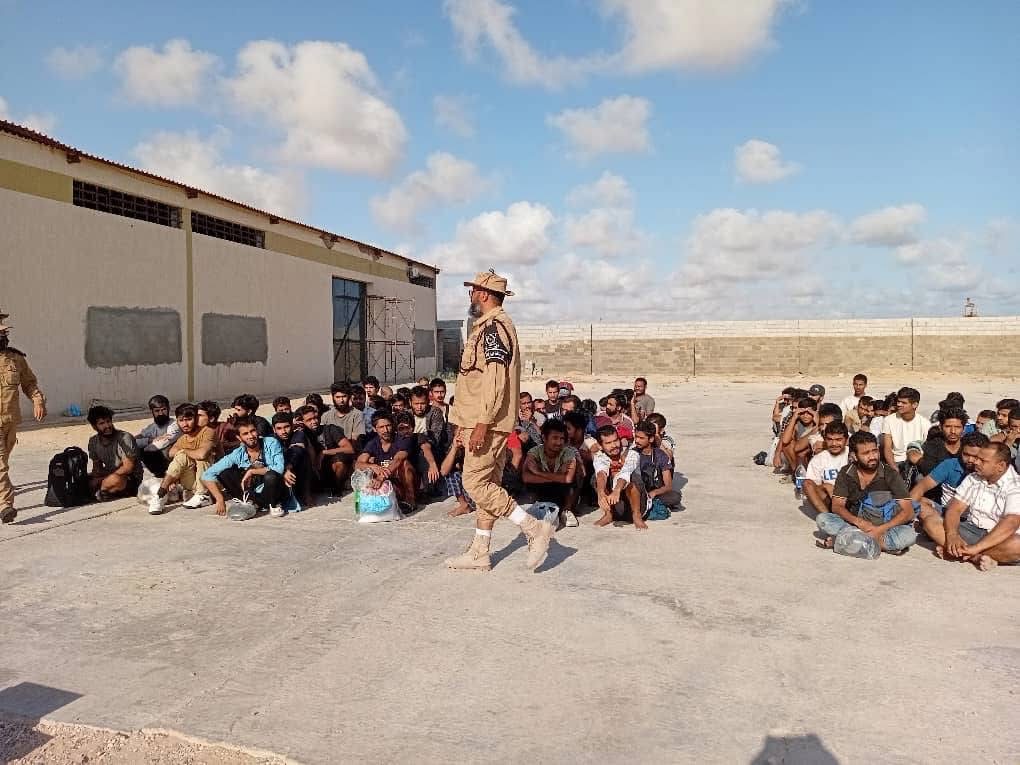
- The Anti-Illegal Immigration Agency in Libya announced the execution of a large-scale deportation operation that included 115 irregular migrants of various nationalities. According to the agency, the operation included the deportation of 28 migrants of African and Arab nationalities, among them 8 from Chad, 16 from Sudan, and 4 from Egypt. They were transported from the city of Sirte to the city of Ajdabiya. An additional 87 migrants of Asian and Arab nationalities were also deported, including 74 from Bangladesh, 11 from Pakistan, and 2 from Syria, from Sirte to the city of Benghazi. The agency’s management confirmed that this step is part of a series of security and humanitarian measures aimed at regulating the status of illegal immigrants and enhancing security and stability within Libyan cities.
- The United Nations Support Mission in Libya (UNSMIL) has issued a grave alarm over rapidly escalating tensions and military mobilization around Tripoli, warning it could lead to a devastating armed confrontation. In a stark statement, UNSMIL expressed awareness of ongoing negotiations under the Presidency Council and entreated all parties to continue discussing remaining issues in good faith, acting in the best interest of Tripoli’s civilian population. The Mission stressed that every human life is precious and that any new conflict risks not only the safety of the capital but also the potential for violence to spread across the country, leading to a ‘lose-lose’ war that would critically endanger civilians.
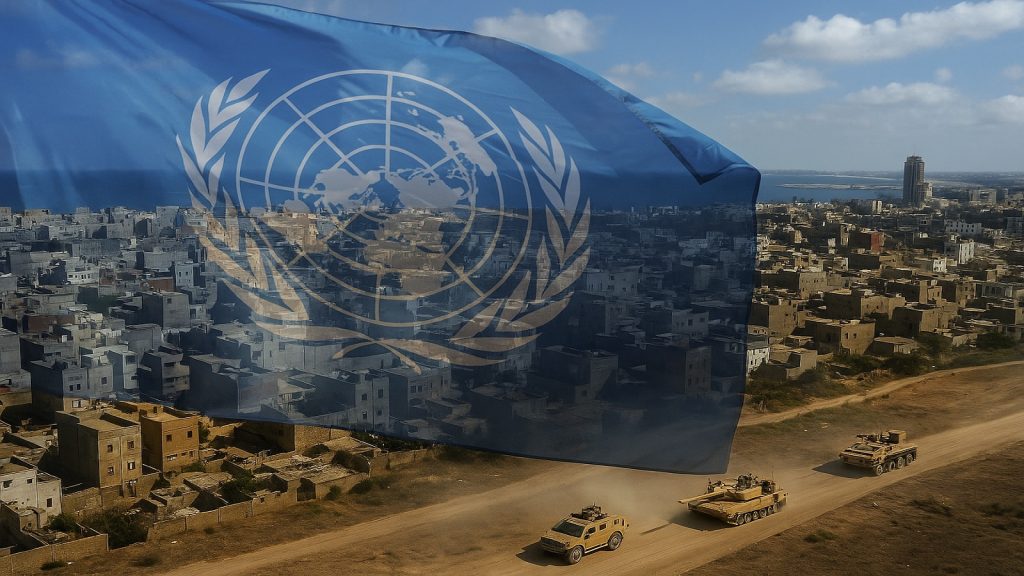
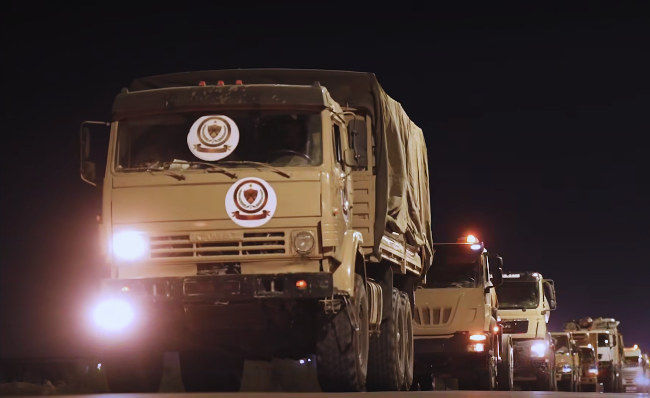
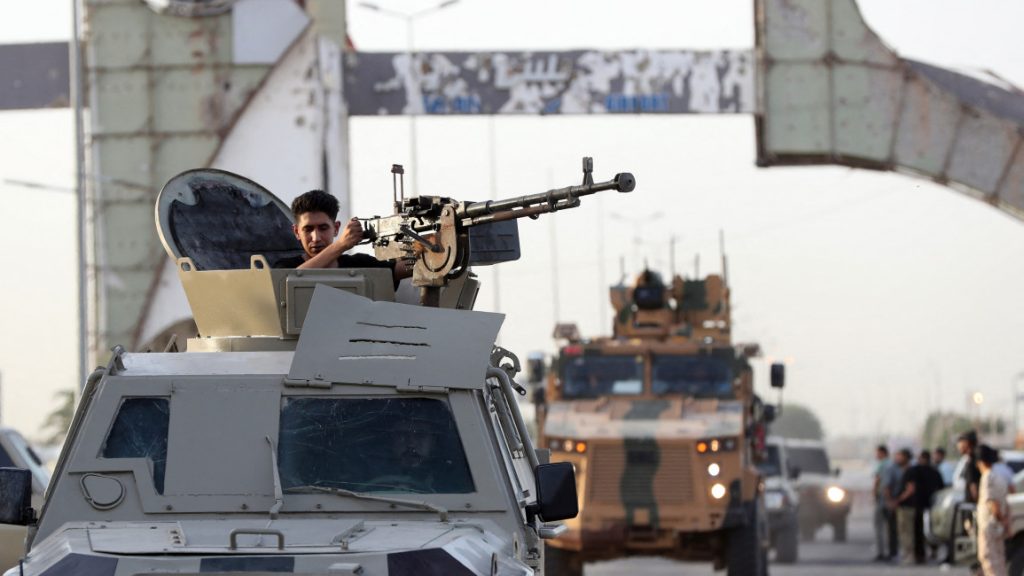
- The General Staff of the Land Forces of the General Command of the Libyan Arab Armed Forces announced the deployment of the 152nd Mechanized Infantry Battalion, part of the reinforced Tariq bin Ziyad Brigade, to new military sites whose nature and locations were not disclosed. The General Staff explained in a statement issued on Sunday that this move is part of a plan for redeployment and strengthening field positions, aimed at raising the level of readiness and carrying out assigned tasks, which contributes to imposing security and stability. The official Facebook page of the General Staff also broadcast a video clip, documenting the movement of the battalion’s convoys to their new deployment sites.This development comes amid a continued state of military alert, with increasing mobilizations and the deployment of heavy weapons around the capital, Tripoli, at a time when the United Nations Support Mission in Libya and the European Union mission have called for de-escalation and clearing civilian areas of armed presence.
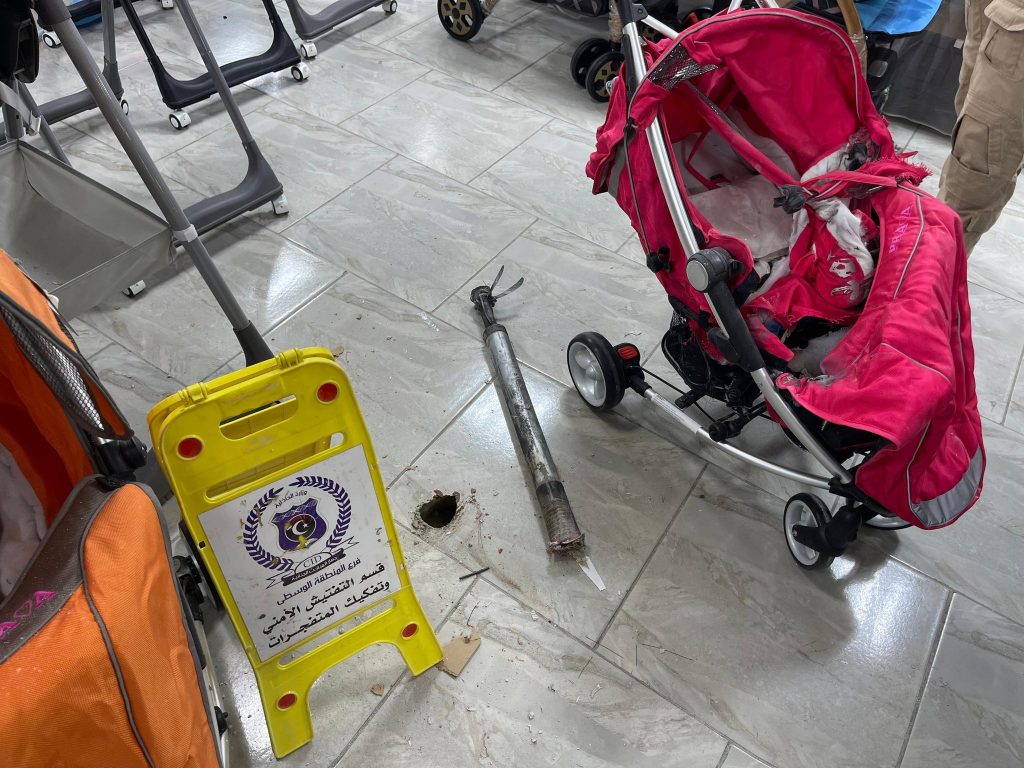
- The Criminal Investigation Department announced on Monday that its specialized teams have managed to retrieve debris from an ammunition depot explosion that occurred in the city of Misrata. The department explained in an official statement that the security inspection and bomb disposal team of its Central Branch found shells and rockets of various calibers that had been scattered outside the depot as a result of the explosion. The statement confirmed that all precautionary measures have been taken to secure the incident’s perimeter and ensure citizens’ safety, noting that field efforts to monitor the situation are ongoing. The spokesman for the Ambulance and Emergency Service, Osama Ali, had reported that the explosion injured 16 people, while the causes of the incident remain unknown.
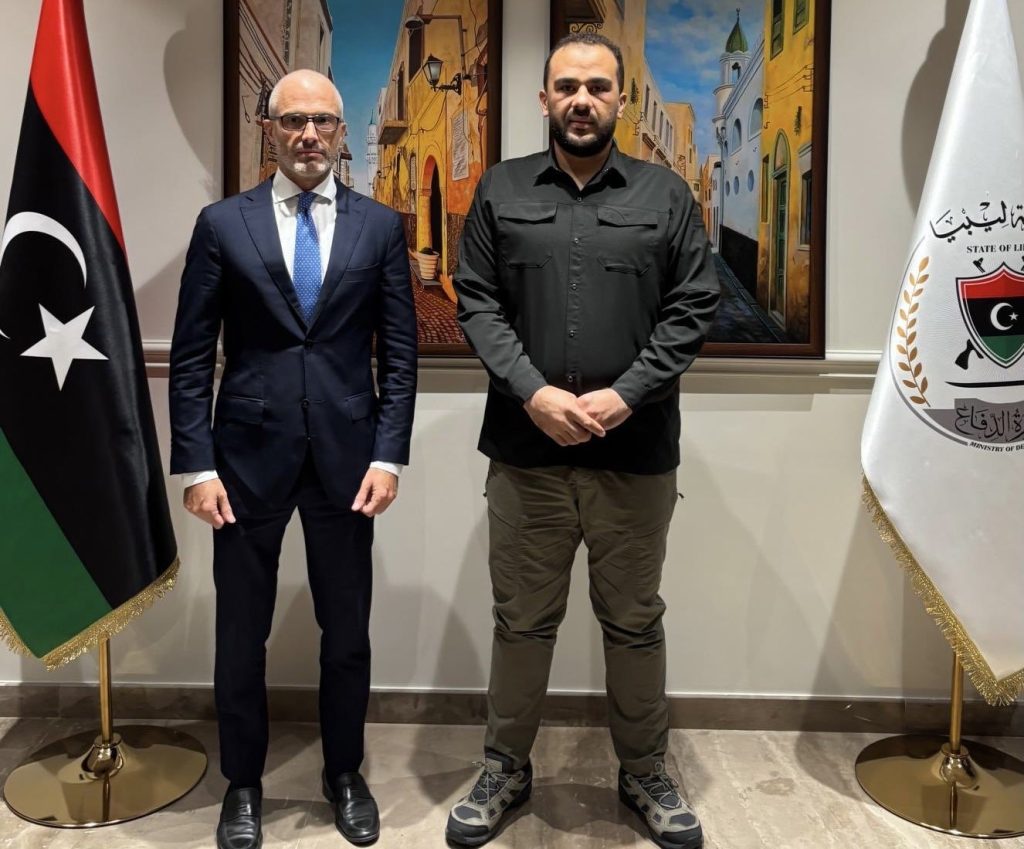
- The European Union’s Ambassador to Libya, Nicola Orlando, welcomed an in-depth exchange of views with the Undersecretary of the Ministry of Defense in the Government of National Unity, Abdul Salam Zubi, regarding the current security developments in the country. During the meeting, Orlando reiterated the European Union’s position calling for the resolution of disputes through peaceful means and constructive dialogue, stressing the importance of working with the Security Arrangements Committee and the United Nations Support Mission in Libya, with the aim of de-escalating tensions and preventing any threats to civilians.
NATIONAL POLITICS AND SOCIAL ISSUES
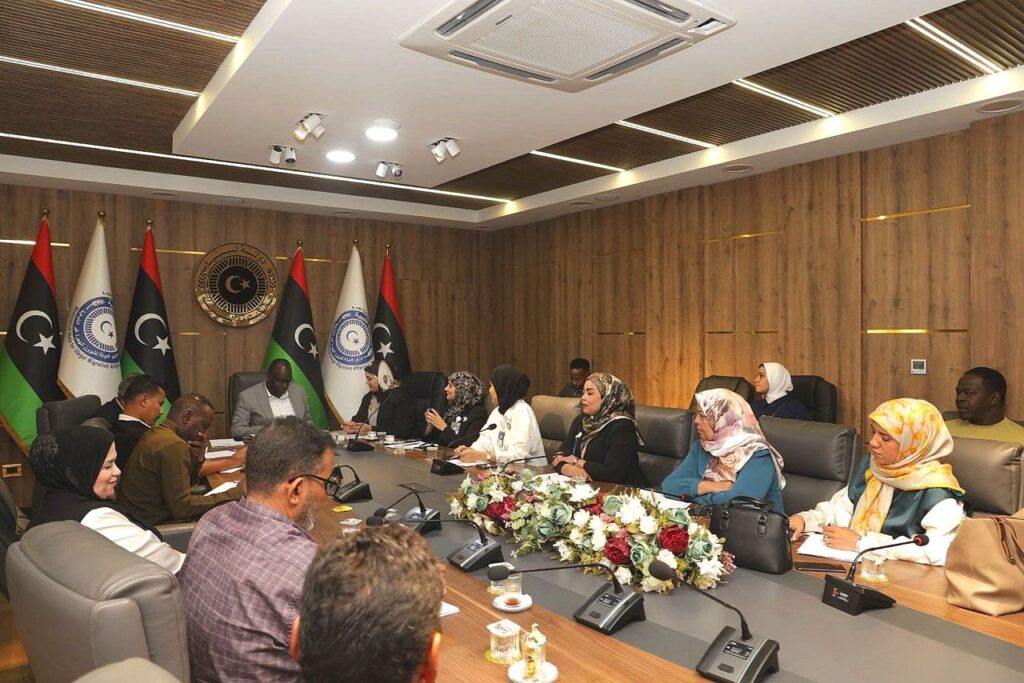
- The Minister of State for Illegal Migration, Fathi Mohammed Musa Al-Tabawi, affirmed that the issue of illegal migration is a top priority for the Libyan government and the Armed Forces, due to its direct impact on national security and societal stability, noting that addressing it requires concerted efforts and intensified institutional work. This came in his statement to the Libyan News Agency while presiding over the ministry’s fourth regular meeting for 2025, held at the Ministry’s Diwan in Benghazi, with the participation of department and office directors and a number of employees.
- The National Human Rights Institution in Libya has held the interim Government of National Unity and its head, in his capacity as Minister of Defense, fully responsible for any violation of the ceasefire agreement and the security arrangements approved by the Presidential Council, stressing that any transgression will have local and international legal consequences. In a press briefing, the institution expressed its grave concern over the ongoing military buildups and movements in and around the capital, Tripoli, warning that these developments threaten a renewal of violence and armed clashes, posing a direct threat to civilian lives and undermining the fragile state of stability.
-
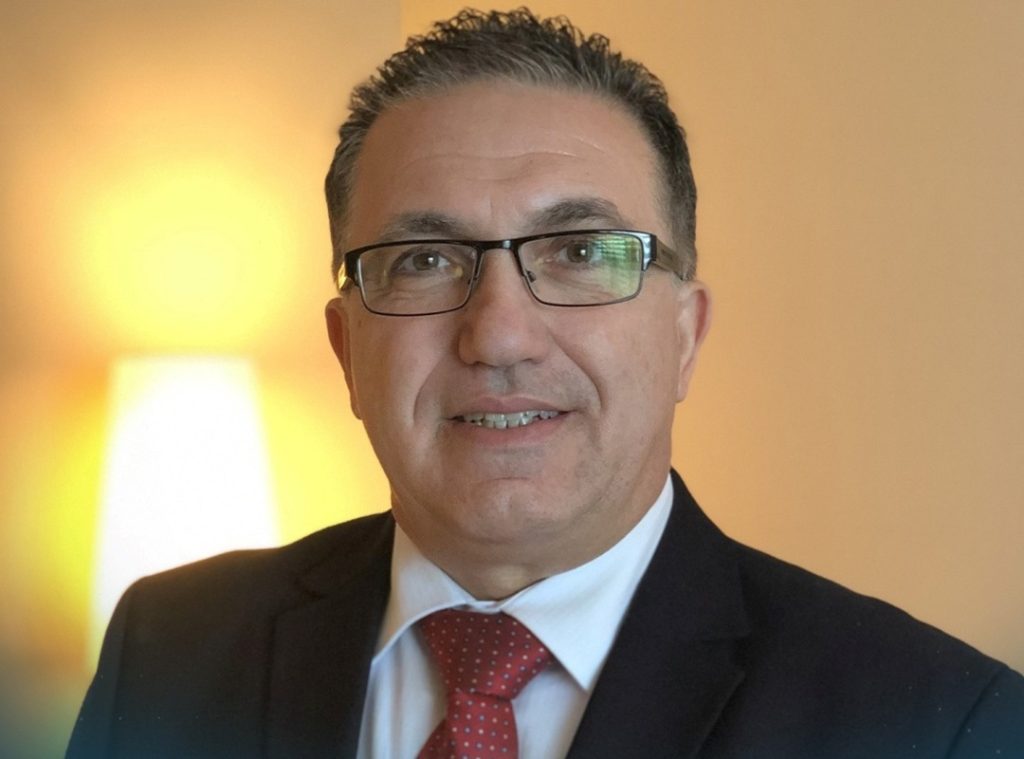
The Maltese Ambassador to Libya, Charles Saliba, in a post on his official Facebook page, called on all Libyan parties to commit to dialogue and reject resorting to violence, stressing that the situation in the capital, Tripoli, remains fragile. The ambassador said that the Libyan people “deserve much better than this spiral of conflict,” stressing the need to return to and continue to engage in serious dialogue, while immediately refraining from armed confrontations. He added that “the struggle for power does not produce real victories, as all parties are losers in the end, while the Libyan people are the ones who pay the heaviest price.”
INTERNATIONAL RELATIONS
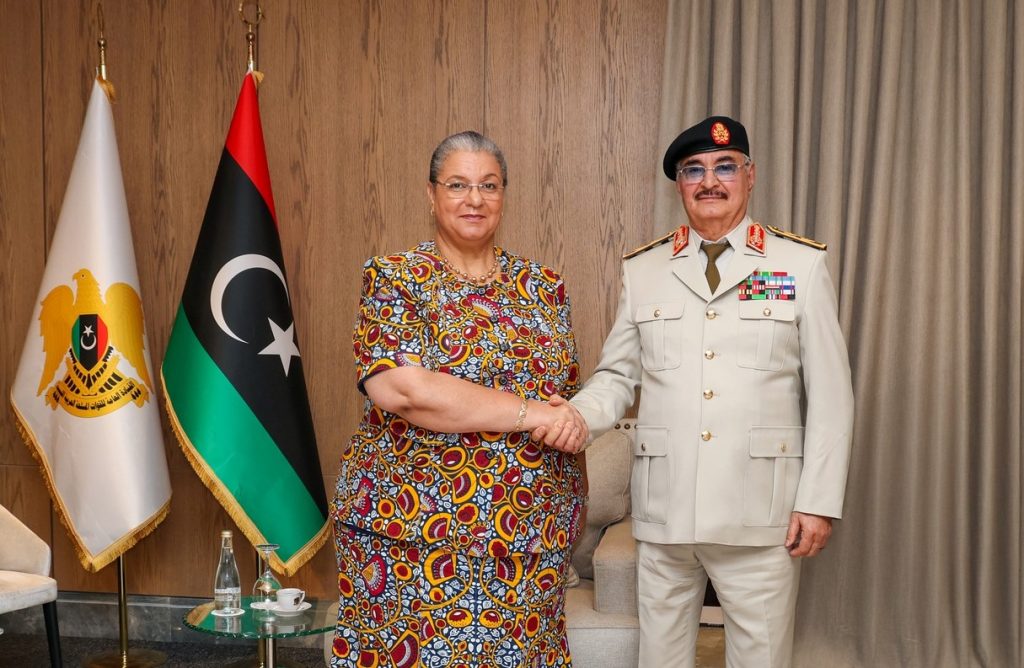
- The Commander-in-Chief of the Armed Forces, Field Marshal Khalifa Haftar, received the Head of the United Nations Support Mission in Libya (UNSMIL), Ms. Hanna Tetteh, and her accompanying delegation today at his office in the General Command headquarters in Benghazi. The meeting was also attended by the Deputy Commander-in-Chief, Lieutenant General Saddam Khalifa. This meeting comes within the framework of ongoing efforts to advance the political process in the country and address recent security tensions.
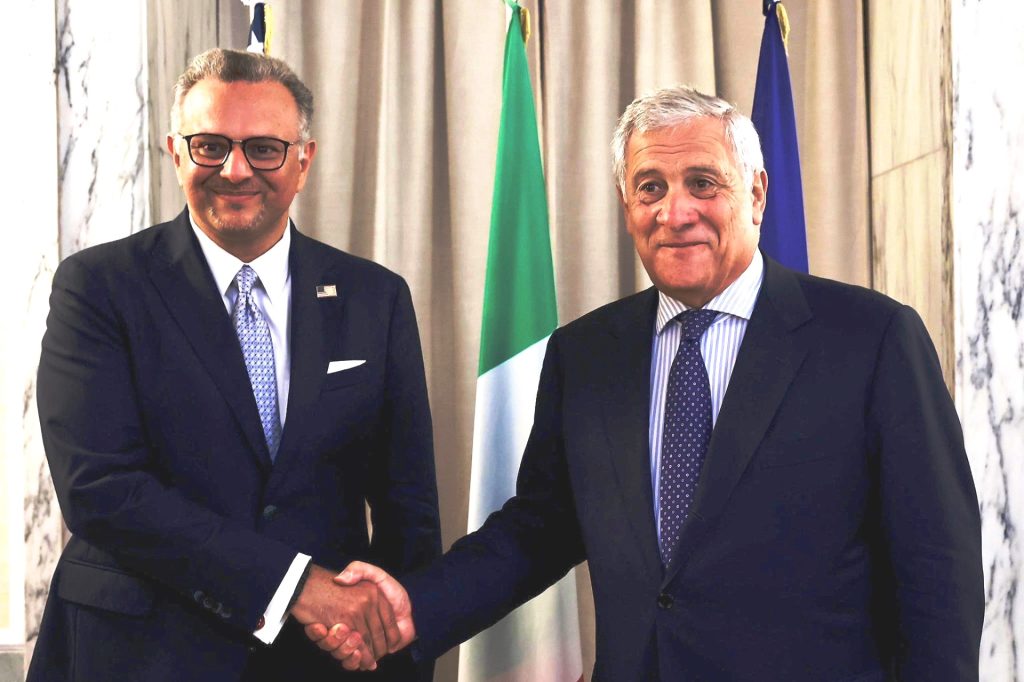
- An analytical report published by the Italian website “Decode 39” covered the meeting between Italian Foreign Minister Antonio Tajani and the US President’s Senior Advisor for Arab, Middle East, and Africa Affairs, Massad Boulos, confirming the two sides’ agreement on the importance of stability in the Middle East and North Africa region. The report, followed by Al-Marsad newspaper, indicated that the meeting effectively reflects the Rome-Washington axis built on four main fronts: Libya, Gaza, Lebanon, and the Horn of Africa, noting that it was held at a crucial time ahead of the United Nations General Assembly meetings this September.
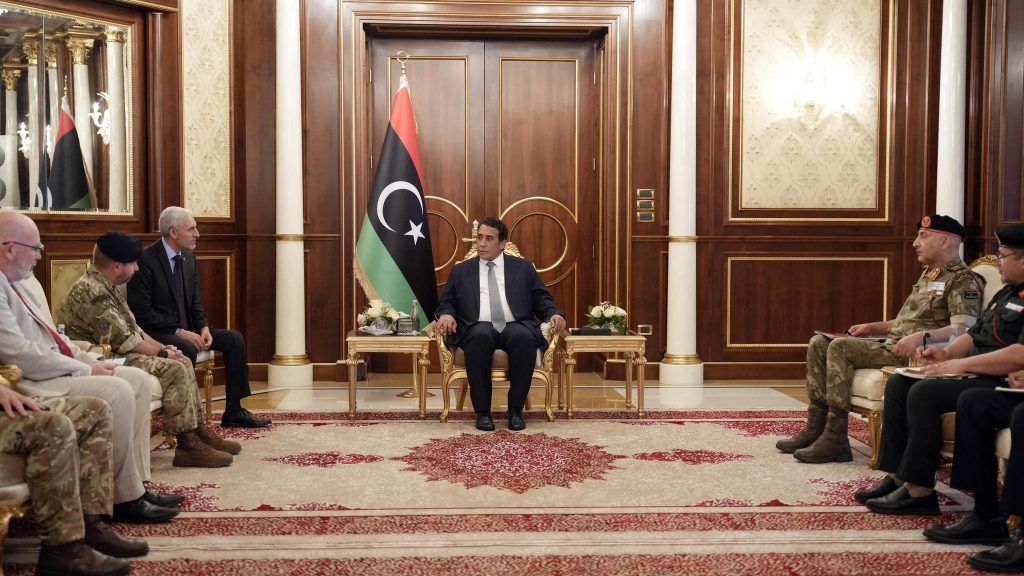
- The President of the Presidential Council, Mohamed al-Menfi, discussed on Tuesday with a British delegation headed by Air Marshal Edward Ahlgren, the British Ministry of Defence’s Senior Advisor for the Middle East and North Africa, the prospects for bilateral cooperation between Libya and the United Kingdom. The meeting, held at the Council’s headquarters in the capital, Tripoli, in the presence of the British Ambassador to Libya, Martin Longden, the Chief of the General Staff, General Mohamed al-Haddad, and the Director of the Office of the Supreme Commander, Major General Mohammed bin Yousef, addressed ways to consolidate the strategic partnership in the fields of security and defense. The meeting also touched upon regional issues of common interest, chief among them combating terrorism, tackling illegal immigration, and strengthening the capabilities of the Libyan military institution.