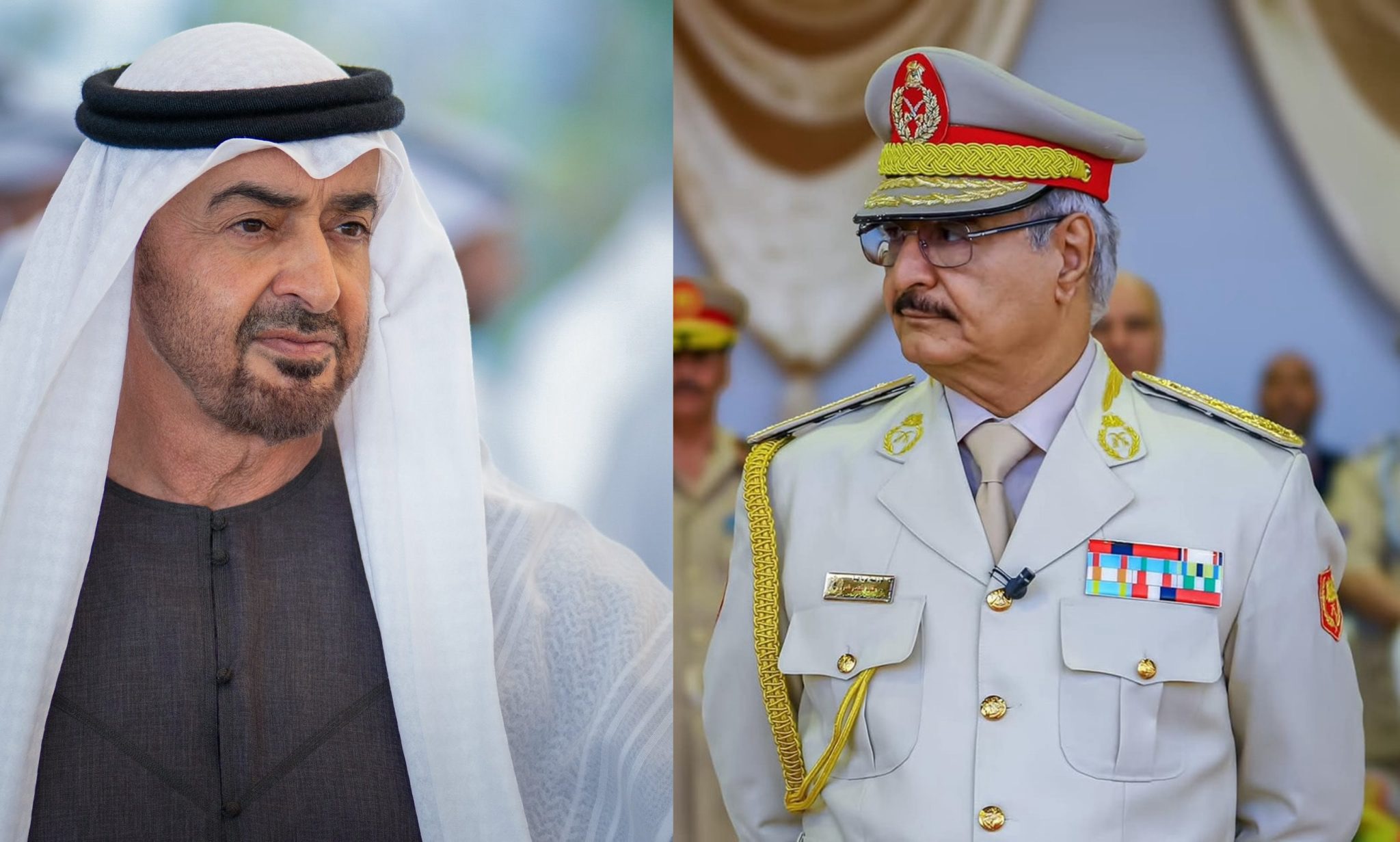
Security and Stability
- Marshal Khalifa Haftar, Commander-in-Chief of the Armed Forces, made a phone call to Sheikh Mohammed bin Zayed Al Nahyan, President of the United Arab Emirates and Supreme Commander of the UAE Armed Forces. During the call, Haftar expressed his strong condemnation of the blatant Iranian attacks that targeted the UAE, affirming that these attacks are a serious violation posing a direct threat to regional stability. He expressed his full solidarity with the UAE against any aggression targeting its security. Haftar also praised the UAE Armed Forces’ ability to efficiently repel most of the attacks.
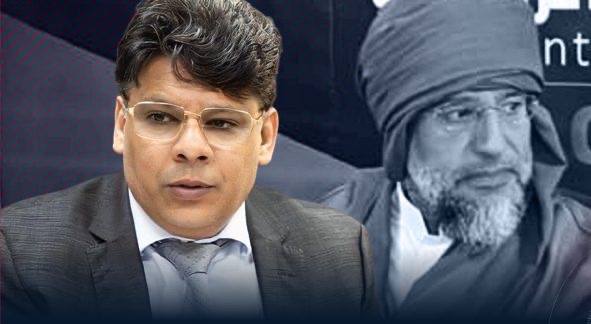
- Attorney General Al-Siddiq Al-Sour announced that arrest warrants were issued for three suspects relate to the investigation of the murder of citizen Saif al-Islam Gaddafi. The Attorney General’s office clarified that authorities aim to reveal the incident’s full circumstances. Investigators examined evidence at the crime scene and collected testimonies of witnesses. The Attorney General added that a technical support team tracked the suspects’ movements that included activities before and after the incident. They also analyzed connections. This linked various locations to the crime scene. Investigative efforts identified the suspects’ meeting location and the timing of their movement to the crime scene was determined. Authorities identified the vehicles used. The routes they traveled were also established. The Public Prosecution confirmed the orders. The three suspects are to be apprehended.
- The Tripoli Criminal Court has sentenced eight defendants to life imprisonment. They were convicted of smuggling narcotic and psychotropic substances. The illicit materials were hidden in vehicles that arrived on two maritime transport vessels. The vessels were named “Grand California” and “Grand España.” They had originated from the port of Antwerp in Belgium.
- Libyan political analyst Ibrahim Al-Suwaiti stated that the Libyan South has always been an arena for settling scores between the Chadian authorities and opposition. This justifies the Libyan National Army’s intervention. Its aim is to prevent security deterioration. This specific area facilitates the smuggling of weapons and irregular migrants.
- The Green Mountain Security Directorate held its first Joint Security Chamber meeting. Security Director Major General Wahbi Anwar Al-Rakh chaired the meeting. Representatives from security and law enforcement agencies participated. These agencies are within the Directorate’s jurisdiction. The meeting aimed to enhance joint coordination. It also sought to raise security readiness in the region. The Security Director emphasized the meeting’s goal to establish a unified work mechanism that will consolidate efforts and strengthen cooperation among security components. Brigadier General Lotfi Al-Khazaali,the head of the Desert Patrols Office, attended along with Colonel Abdul Salam Al-Shara, Director of the Investigations Office in the Eastern Region. The Assistant Director of the Shahhat branch was present. Colonel Reda Hweirish, Director of the Al-Bayda branch, also joined.
- General Commander Field Marshal Khalifa Haftar affirmed that the army is Libya’s impenetrable shield. He emphasized the importance of enhancing its readiness. He also stressed keeping pace with modern military developments. This ensures the army’s ability to confront various security threats. It also maintains the country’s security and stability. Haftar made these remarks during an Iftar banquet for armed forces officers.
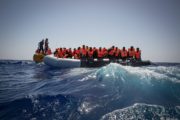
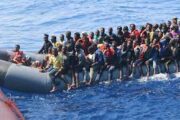
- A Sirte coast patrol rescued 85 migrants north of the city, while the General Directorate for Coastal Security announced the rescue of 52 irregular migrants off Qarabulli, later handing them to the anti-illegal migration authorities east of Tripoli. Authorities deported 57 irregular migrants via Benghazi during the week, showing continued emphasis on interdiction and removal.
- The UN Security Council reaffirmed support for UNSMIL and Hanna Tetteh’s roadmap, calling on Libyan actors to avoid unilateral moves and work toward the unification of institutions and the budget. A message that is in direct intersection with the country’s worsening institutional fragmentation and security-management disputes.
Governance, Economy, and Politics
- The Libyan Investment Authority discussed with the Russian ambassador the performance of its investments in Russian financial markets and implementation of UNSC Resolution 2769 (2025) to protect and preserve the value of Libyan assets. This suggests continued efforts to move from simple asset preservation toward more active portfolio management within the limits of international restrictions.
- The Attorney General, Al-Siddiq Al-Sour, met with the head of the Civil Status Authority. They reviewed the final stages of the project that establishes an electronic civil registry database. The meeting also discussed technical specifications that guarantee data validity. They ensure the database is free from any breaches. This strengthens its reliability and safeguards the information within it. Both sides reviewed investigation results. These concerned civil status data forgery. They also discussed procedures for evaluating residency, transfer, and subscription data that is subject to criminal review.
- The Speaker of the Libyan House of Representatives, Ageela Saleh, received the Minister of Justice of the Libyan government in Al-Qubah. They discussed several issues related to the judiciary sector. They also discussed enhancing the justice system in Libya. The meeting addressed ways to develop judicial work. It also focused on improving the performance of justice institutions.
- MP Abdel Moneim Al-Arfi stated the House of Representatives reached a conclusion during its consultative session on the goods tax law. He confirmed that the imposed law was not approved by the House of Representatives. Even if approved, it must comply with established legal and constitutional frameworks. This applies to all laws. Al-Arfi added that the House identified confusion around the Central Bank’s monetary and financial policies.
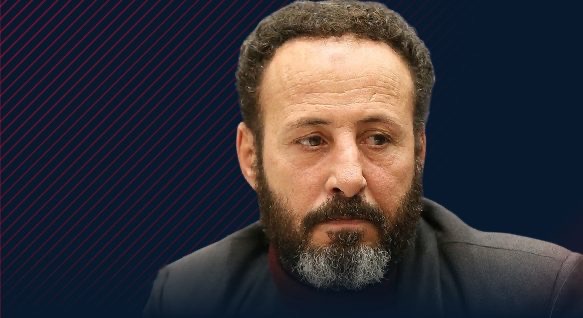
- The Second Deputy Speaker of the House of Representatives, Misbah Douma, called for an urgent national dialogue that aims to break the political stalemate in Libya. It also seeks to pave the way for a unified government. This government must possess powers and legitimacy. It should operate within a single budget. This budget will ensure equitable wealth distribution among all regions. Douma issued a statement regarding the National Initiative to Unify Institutions and Restore Sovereignty. He clarified that unifying the executive authority is essential. It is the primary gateway to establishing financial and economic stability. It will also guarantee service provision to citizens. Services must reach all cities and villages without discrimination.
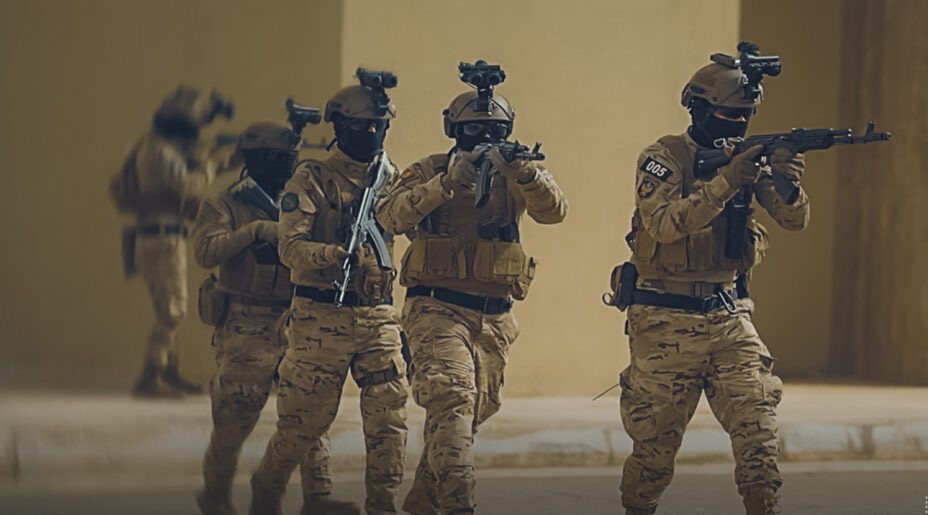
- The Military Information Division of the General Command of the Armed Forces announced that Commando Battalion CDO 123 is continuing its intensive training programs. This battalion is affiliated with the Reinforced Tariq bin Ziyad Brigade. The training follows directives from Commander Field Marshal Khalifa Haftar. The division added this information via its official Facebook account. These training sessions aim to raise combat readiness. They also enhance field efficiency. This ensures a rapid response to various missions.
- The Benghazi Community Partnership organized a dialogue session held in cooperation with Benghazi Municipality. The topic was “Exchange Rate Changes and Tax Imposition: Financial Balance vs. Impact on Community Security”. It discussed current economic transformations and covered their repercussions on living conditions and security. The session focused on three main axes. First, it examined the feasibility of changing the exchange rate. It also looked at imposing taxes. Their ability to contribute to solving Libya’s financial crisis was discussed. Second, the impact of these measures on the general economic scene was reviewed. Their reflection on citizens’ ability to meet basic needs was also covered. Third, potential effects of these policies on the security landscape were debated. Safe transition paths available amid current changes were also a point of discussion.
- The Libyan government has called for the immediate launch of a comprehensive and serious national dialogue aimed at unifying the executive authority and forming a unified government. This body would lead the country toward completing constitutional and electoral requirements, ensuring the restoration of stability and an end to political division. In an official statement, the government emphasized that Libya is traversing a critical phase where economic challenges are intertwined with political complexities. These factors have directly impacted state stability and institutional performance, leading to continued division and the stalling of constitutional and executive paths, which threatens national unity and undermines opportunities for growth and stability.
- The Social Security Fund’s Southwest Branch announced the Pension Linkage Committee continues its intensive work of reviewing the files of public sector retirees. This aims to quickly process their transactions and ensures the swift completion of their procedures. The branch stated that these efforts follow management directives that emphasize accelerating the work pace and aim to overcome any difficulties that might hinder file completion. This ensures pensions are disbursed on time and enables retirees to receive their entitlements easily.
- Economic governance remained highly tense because of the backlash over the new import tax. Parliamentary leaders sought to distance themselves from the measure, with Aguila Saleh denying responsibility and saying the law had been approved in a January session chaired by another deputy. Economic and civic actors in Benghazi held a dialogue on the impact of exchange-rate changes and tax imposition on both household welfare and security conditions.
- The Tripoli Criminal Court convicted a financial controller at Libya’s mission in Kazakhstan for misappropriating public funds, sentencing him to four years and six months in prison and stripping him of civil rights for the duration of the sentence plus one year after release. The ruling points to ongoing prosecutorial efforts to signal oversight over state resources.
- The Unified Digital System for Chambers of Commerce was launched in Tripoli to improve e-services, trade statistics, and commercial verification. Libya discussed stronger cooperation with Serbia and reviewed a Libya–Africa corridor project in Tripoli, indicating continued efforts to position the country as a logistics and commercial hub despite internal dysfunction.
Economy and Energy
- The Mabruk field resumed higher output after the commissioning of a new early production unit, reaching 25,000–30,000 barrels per day, with technical teams targeting about 40,000 bpd by the end of March from Mabruk and Al-Jurf combined. In parallel, the NOC held technical discussions with Arabian Gulf Oil Company (AGOCO) on mechanisms to lift production further in 2026, emphasizing efficiency and removal of operational bottlenecks.
- Libya’s export significance to Europe also stood out. Libya Herald reported that Libya supplied 13,434,662 tons of crude to Italy in 2025, accounting for nearly a quarter of Italy’s total crude imports. Libyan Express further noted this week that Italy was looking at Libya as a possible additional gas source amid disruptions to Qatari supplies, reinforcing Libya’s role as a strategic Mediterranean energy partner.