Security and Stability
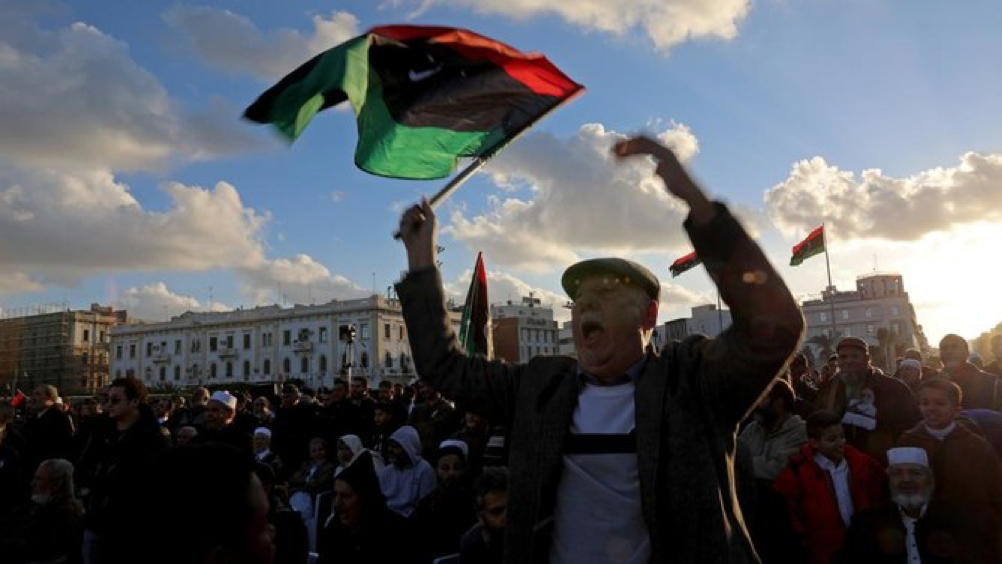
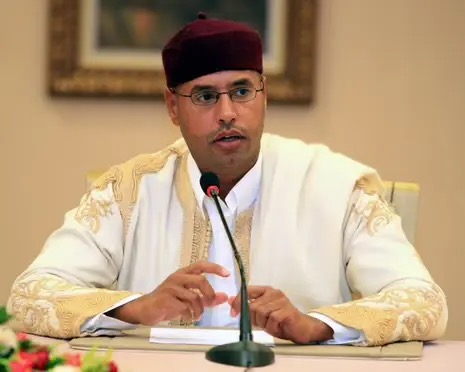
- The political team of Saif al-Islam Gaddafi, the second son of Colonel Muammar Gaddafi, announced his assassination on February 3, 2026 in the city of Zintan. The statement described that four individuals carried out the operation storming his home, turning off the cameras, then killing him in a direct confrontation.The statement lauded his role as a “mujahid” (struggler) and “reformer.” The statement called on the Libyan judiciary and appealed to the international community demanding an “independent and transparent local and international investigation.” The political team called on Saif al-Islam’s supporters urging the Libyan people to “exercise self-restraint, wisdom, and patience.” Saif al-Islam Gaddafi had announced his candidacy for the Libyan presidential elections on multiple occasions.
- The Libyan Public Prosecutor officially confirmed the death of Saif al-Islam Gaddafi. Authorities stated that investigations were underway. No further details regarding perpetrators or circumstances were disclosed at the time of publication. The announcement triggered political and international reactions.
- Former Spokesperson for the Presidential Council, Mohammed Al-Sallak, revealed to the media that the people of Zinta expressed displeasure over the continued social cover and protection provided to Saif al-Islam in the city, a few weeks ago. However, other voices denounced this. Others denied that such statements had come from any party in Zintan.
- Brigade 444 Combat issued an official statement on its page denying social media reports concerning its alleged involvement in clashes in Zintan and news about the brigade's involvement in the killing of Saif al-Islam Gaddafi.
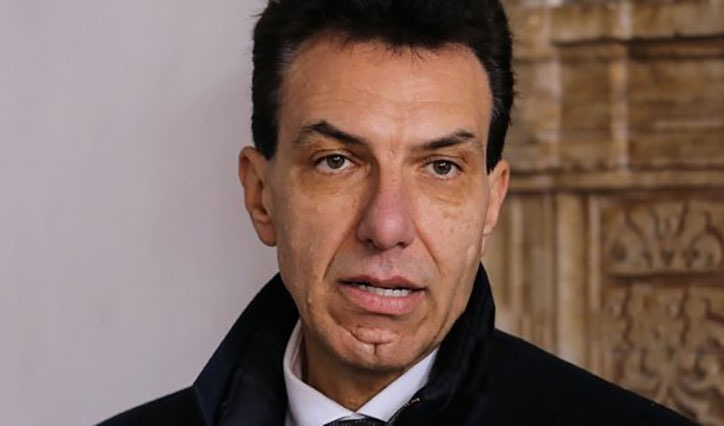
- Italian political analyst and strategic consultant Daniele Ruvinetti commented on the killing of Saif al-Islam Gaddafi, describing it as a dangerous incident in a country already suffering from significant instability.
- The United Nations Support Mission in Libya (UNSMIL) has expressed deep concern over the killing of Saif al-Islam Gaddafi. The mission called for restraint and respect for due process. The statement highlighted risks to stability and reconciliation efforts. No operational measures were announced by UNSMIL.
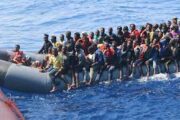
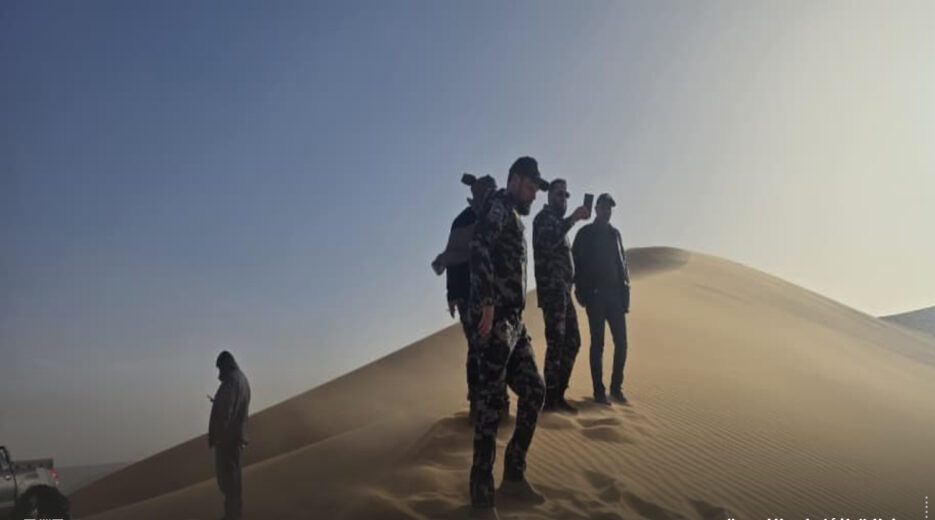
- Joint desert patrols were launched by the Committee for the Reorganization of Cities in coordination with military and security bodies. The patrols targeted illegal migration routes and drug smuggling networks in desert areas. Smuggling networks included a gang importing and smuggling cocaine from Nigeria to Libya. The operation forms part of a broader security plan to regain control over sparsely governed regions. Authorities emphasized sustained field presence and inter-agency coordination.
- The Deputy Prime Minister for the Southern Region and Minister of Defence stated that forces affiliated with the Libyan Arab Armed Forces General Command responded to an armed attack targeting the Al-Thouwm border crossing. The attack was attributed to mercenary and armed groups operating across the southern border. Military units secured the area following the incident. Authorities described the attack as an attempt to undermine sovereignty and destabilize southern security.
Governance and Politics
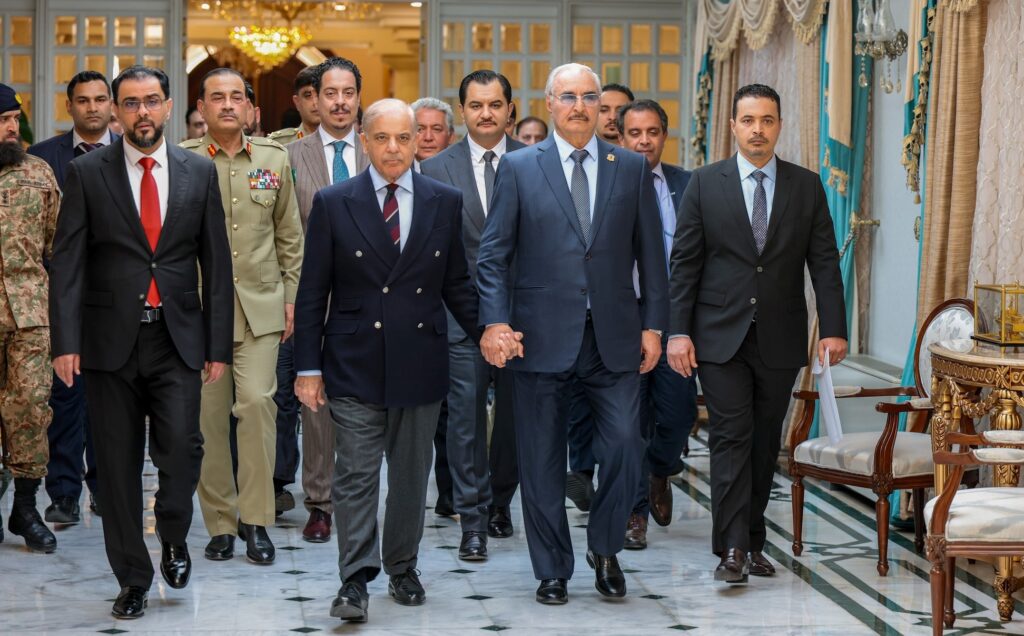
- The Commander-in-Chief of the Armed Forces, Field Marshal Khalifa Haftar, held a meeting with the Prime Minister of Pakistan, Mr. Muhammad Shehbaz Sharif, along with several Pakistani government ministers during his official visit to the Islamic Republic of Pakistan. The meeting discussed ways to enhance bilateral cooperation across various fields, in addition to addressing regional and international issues of mutual concern.
- The US president’s Senior Adviser for African affairs, Massad Boulos, confirmed a meeting held in Paris between representatives from eastern and western Libya. The meeting reportedly took place the previous week. No official communiqué or binding outcomes were announced. The talks were described as part of ongoing efforts to reduce political fragmentation.
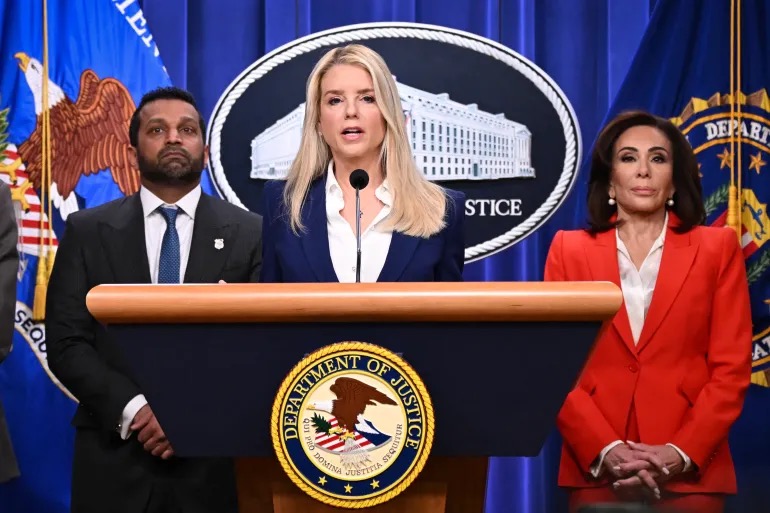
- US Attorney General Pam Bondi revealed the arrest of Libyan Zubayr al-Bakoush, suspected of carrying out the attack on the US consulate in Benghazi in 2012 and the killing of former US Ambassador Chris Stevens.
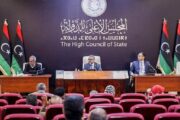
- The Supreme Judicial Council reaffirmed in an official statement the preserving judicial unity and independence is a national obligation, being the sole legitimate authority representing Libya’s judicial institutions. The Council rejected attempts to form or recognize alternative judicial bodies. The statement was framed as a response to internal disputes over judicial governance.
- The High National Elections Commission announced an international scientific conference addressing voter abstention in Libyan elections. The event is organized in cooperation with the Libyan Academy for Postgraduate Studies. The UN Electoral Support Team in Libya is expected to participate. The initiative aims to study declining participation and improve electoral engagement.
Economy, Energy and Infrastructure
- Libya plans to raise natural gas production to approximately 1 billion standard cubic feet per day over five years. The objective is to increase exports to Europe by early 2030. Authorities also plan to begin shale gas exploration in the second half of 2026. The strategy was presented as part of long-term energy diversification.
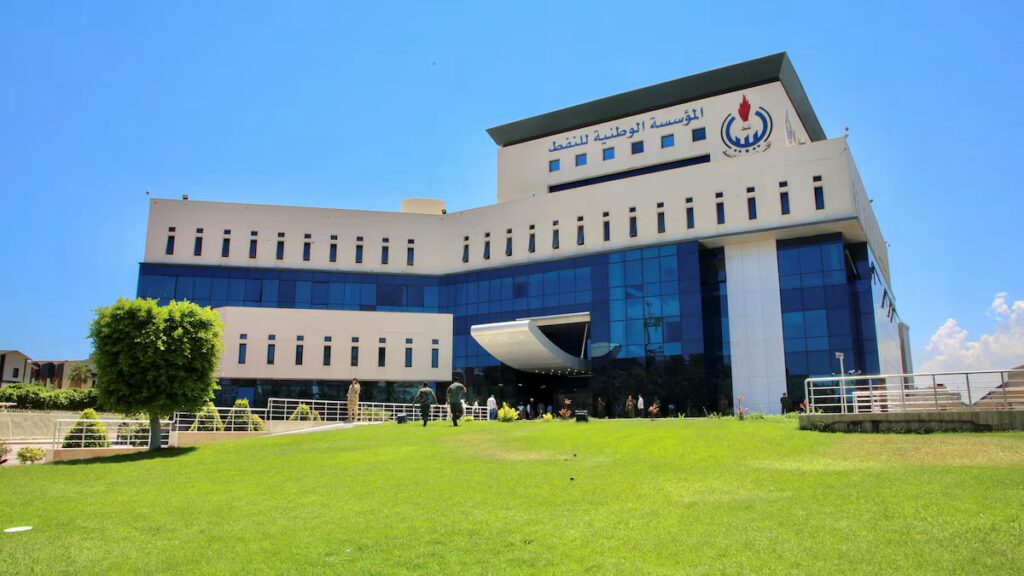
- The Tripoli-based Ministry of Economy and Trade issued Decision No. 51 of 2026, prohibiting the pricing goods based on black-market foreign exchange rates. Authorities stated the measure aims to stabilize prices and protect consumers. Enforcement mechanisms were not detailed in the announcement.
- Relevant authorities have started the second phase of expansion works on the dual coastal road in Sirte. The project aims to improve traffic flow and road safety. Authorities framed the works as part of broader infrastructure development in central Libya. No completion timeline was announced.
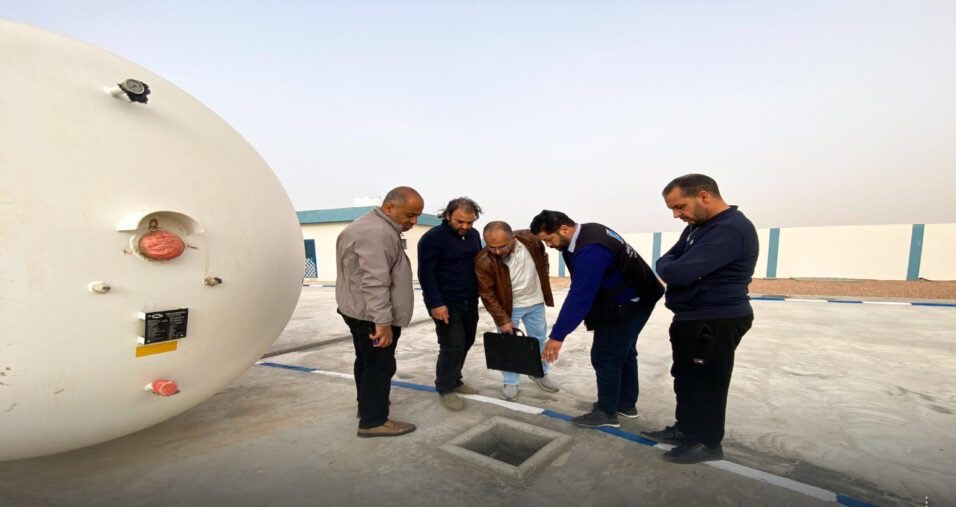
- A committee from Brega Oil & Gas Marketing Company, together with the National Development Agency, inspected a new immediate gas filling point in Al-Sawawa (Sirte). The visit focused on operational readiness and service capacity. The facility is intended to improve local gas distribution. No opening date was specified.
- Maintenance and development work continues on the runway of Sabha International Airport. This is part of the National Development Authority’s plans. The project aims to improve aviation safety and operational capacity. Sabha remains a key hub for southern Libya. No disruptions to air traffic were reported.
- The House of Representatives Foreign Affairs and International Cooperation Committee organized a workshop in Sebha on climate adaptation. The discussions focused on a water-energy-food-ecosystem approach. Participants addressed sustainability challenges specific to southern Libya. The workshop was framed as preparatory and consultative.
- Libya joins the “Sputnik Pro” project and launches the first training course at Tripoli University.