NATIONAL SECURITY ISSUES
- The Criminal Investigation Department announced on Saturday that it had identified one of the unknown bodies found in Al-Khadra and Abu Salim hospitals on May 13, 2025, according to a statement issued by the Ministry of Interior of the Government of National Unity. The statement explained that investigation teams had begun their technical procedures from the outset under the supervision of the Public Prosecution, where genetic fingerprints were lifted from the crime scene and DNA samples were taken from the body, to be later compared with the data of relatives of missing persons. The examination results showed a match between the sample and the genetic traits of the relatives of citizen Al-Qamoudi Mohammed Mohammed Al-Qamoudi, born on February 3, 1969, and a resident of Tajoura, who worked as an officer in the intelligence service. A review of missing persons records showed that the aforementioned individual was reported missing on February 19, 2020, in the Al-Dhahra area of Tripoli, based on a report filed by his family with the Attorney General’s office in the capital.
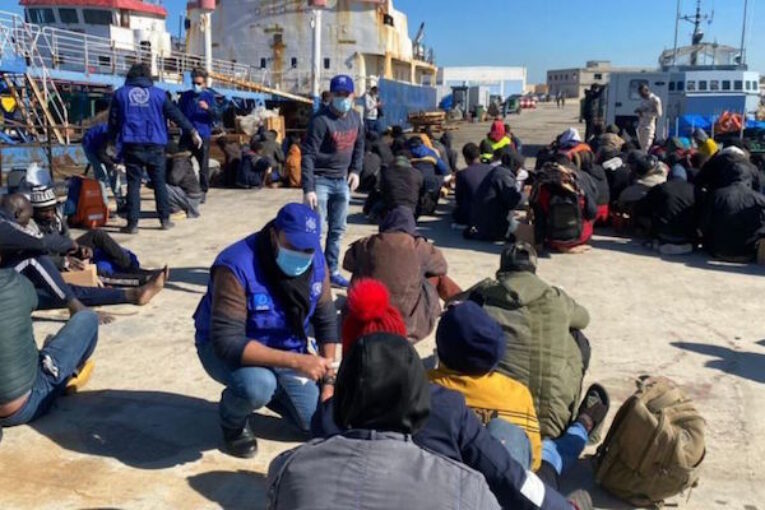
- A news report published by the English-language Kenyan news site “Digital News” shared an account from a Somali businessman and politician with a security background about his experience in Libya. The report, which was followed and its most important news content translated by Al-Marsad newspaper, quoted “Abshir Aden Ferro” on his journey to the country from Europe, where he currently resides, to rescue a detained relative, which later enabled him to free 400 Somalis. Aden Ferro said: “In early August, I received a late-night phone call that changed my life after a distressed family member told me that my 25-year-old relative had tried to make that”.
-
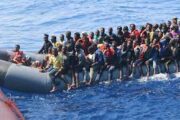
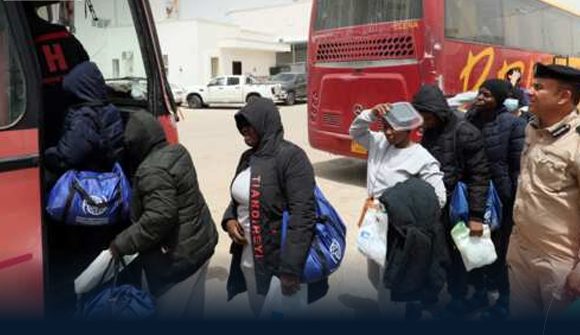
From 31 August to 6 September, a total of 769 migrants were intercepted at sea and returned to Libya, according to the latest weekly maritime update from the International Organization for Migration (IOM). The report states that so far in 2025, 16,241 migrants have been intercepted and returned to Libyan shores. This figure includes 14,083 men, 1,460 women, and 553 children, with an additional 145 migrants for whom no gender data is available. The Central Mediterranean route remains deadly, with 429 deaths and 394 missing persons recorded from 1 January to 6 September 2025.
- The Investigation Department of the Criminal Investigation Agency announced the arrest of 36 individuals wanted in various criminal cases last August, in execution of arrest warrants issued by public prosecution offices, several police stations, and criminal investigation departments affiliated with security directorates. These operations are part of the agency’s ongoing efforts to enhance security and pursue outlaws. In a related context, a team from the agency’s Security Inspection and Explosives Disposal Office managed to recover remnants of war in the Al-Hadba Project and Souq Al-Sabt areas of the capital, Tripoli.

NATIONAL POLITICS AND SOCIAL ISSUES
- The Minister of State for Illegal Migration Affairs, Fathi Al-Tabawi, received the Chairman of the Board of Directors of the National Observatory for Migration, Walid Abed Rabbo, at his office in the Ministry’s headquarters in Benghazi, in the presence of the Director of the Experts’ Office and the Deputy Director of the Center for Migration Studies and Research. The meeting addressed mechanisms for enhancing cooperation and coordination between the Ministry and the National Observatory, particularly developing the media and legal monitoring system, improving the work of the national monitoring and statistics teams, in addition to exchanging information and reports related to the migration file.
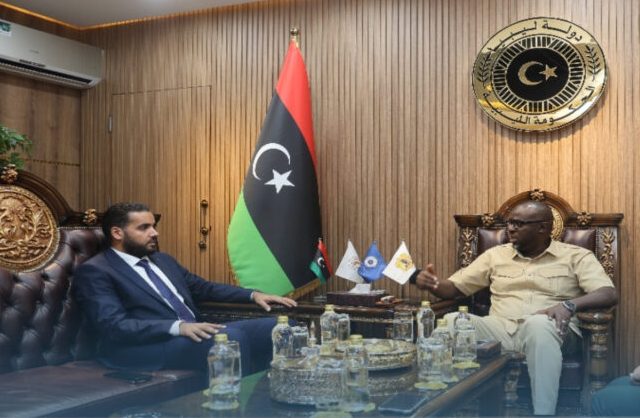
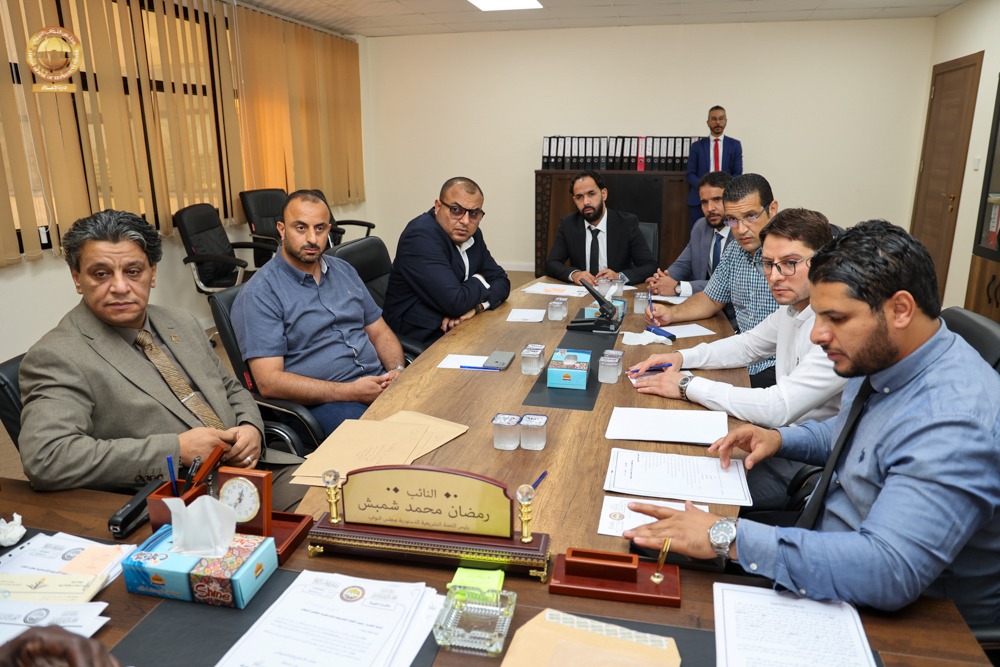
- The Legislative and Constitutional Committee of the House of Representatives, with the Minister of Justice of the Libyan Government, Counselor Khaled Masoud, discussed the development of judicial legislation and the enhancement of judicial work in the country. The meeting, chaired by the committee’s head, Ramadan Shambesh, and attended by Vice-President Mohammed Amdour and committee members, as well as the Director of the Legal Office at the Ministry of Justice and a committee from the Judicial Expertise and Research Center, discussed important legal proposals prepared by specialized committees. These included a draft law to regulate the work of the Judicial Expertise and Research Center, which aims to develop the center’s technical and administrative performance and enhance its role in supporting the judiciary.
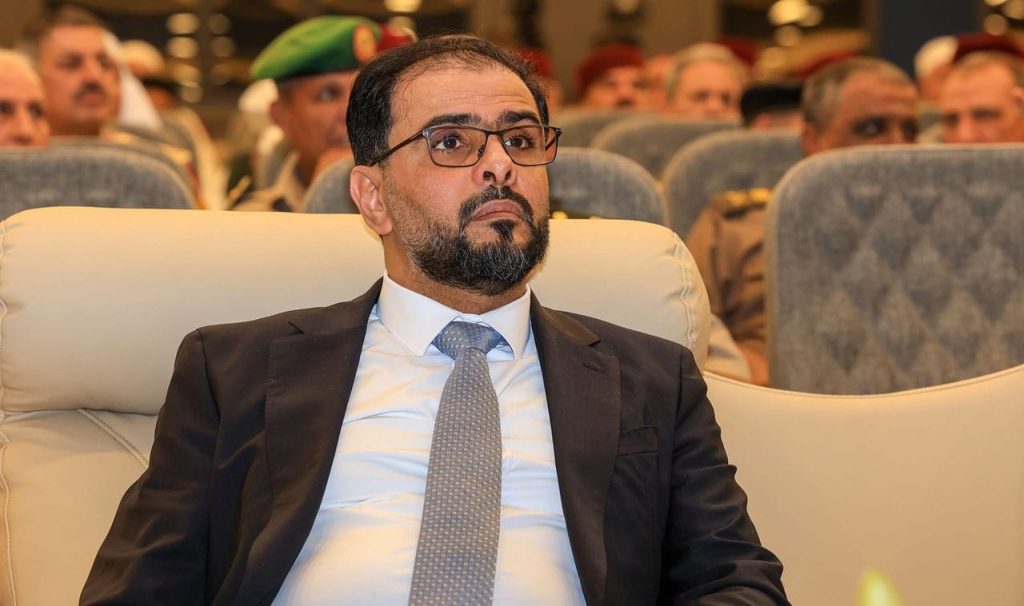
- The Libyan government, headed by Prime Minister Osama Hamad, has condemned the recent attack that targeted residential buildings in the Katara district of the Qatari capital, Doha, describing it as a cowardly act of aggression that lacks any legal or humanitarian justification and represents a direct threat to the lives and security of civilians. In an official statement, the government stressed its full and permanent solidarity with the State of Qatar in the face of this attack, affirming its support for all measures taken by Doha to preserve its sovereignty and protect its citizens. It noted that the attack is a blatant violation of international law and a clear breach of the United Nations Charter and international covenants, considering it an unacceptable act of aggression that contradicts human and legal values.
- The High National Elections Commission (HNEC) today, Wednesday, officially adopted the final results for the municipal council elections (Second Group), encompassing 34 municipal councils, in accordance with its Decision No. (147) of 2025. In a related development, the Commission also adopted the final result for the Ash Shurayf municipal council election. This election was part of the first group of municipal elections and its results were previously withheld under Commission Council Decision No. (131) of 2025, in compliance with a ruling by the Gharyan Primary Court. The adoption of the Ash Shurayf result was formalized through Decision No. (148) of 2025.
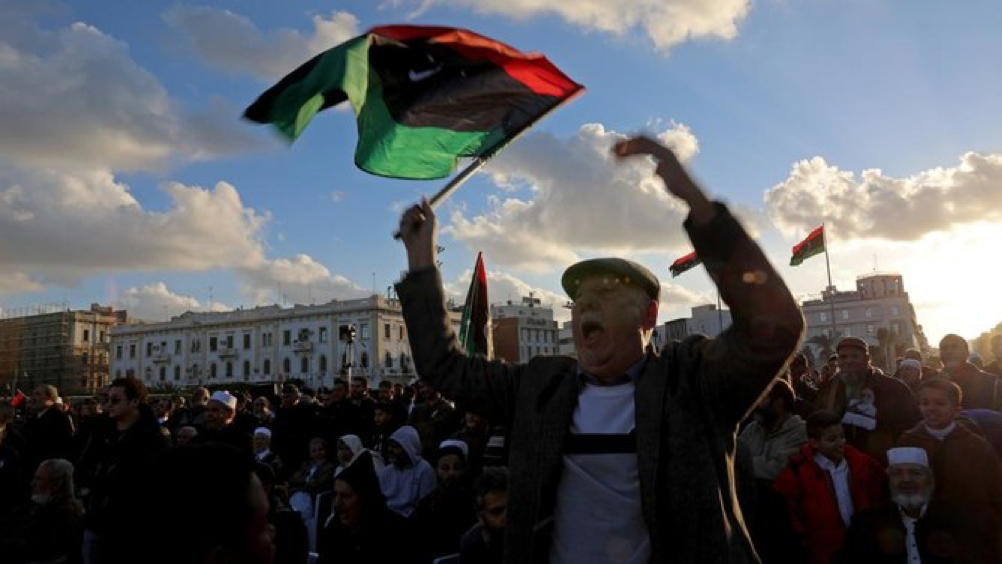
- Libyan national security researcher Faisal Bualraiga said that the recent military movements in the capital, Tripoli, reveal the fragility of the security arrangements sponsored by the United Nations following previous agreements, stressing that the Libyan scene is still governed by armed networks with economic and security interests more than it is by a state structure. Bualraiga explained, in special statements to Sky News Arabia, that the residents’ rejection of these mobilizations reflects a state of social weariness with the militarization of daily life and the direct threat it poses to civil stability.
-
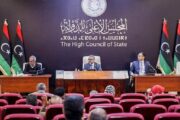
High Council of State member Mansour Al-Hasadi, a leader in the Muslim Brotherhood, believes that the agenda for the Council’s general session, scheduled for Tuesday, is not in line with the reality Libya is experiencing. In a tweet on his official X platform account, Al-Hasadi explained that there are priorities that should top the agenda, foremost among them the issue of military mobilizations and taking a stance and a decision on the 14 billion dinar embezzlement crime. Al-Hasadi also stressed that preparing for the roadmap and working to ensure its success must be among the discussion priorities for the upcoming session.
INTERNATIONAL RELATIONS
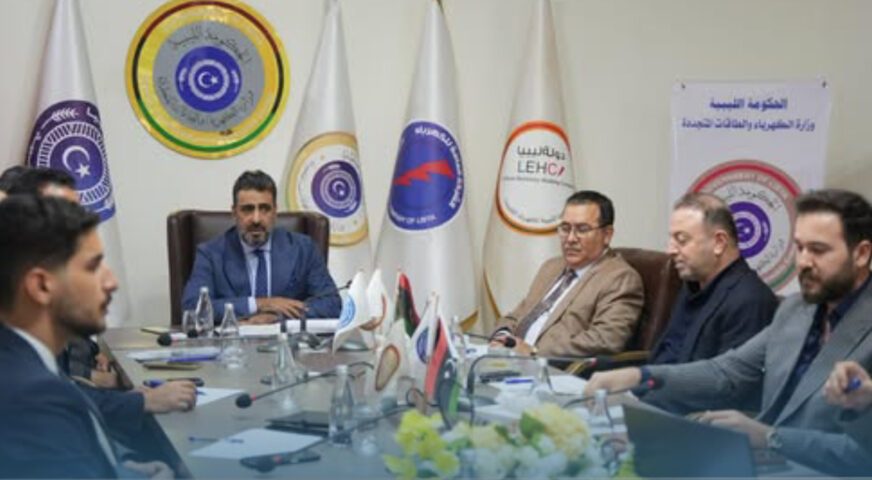
- The Libyan government’s Ministry of Electricity and Renewable Energy discussed with a delegation from the Turkish company Gesert İsa Group ways of cooperation in the field of renewable energy and the localization of the electrical industry within Libya. This occurred during a meeting held at the ministry’s headquarters in Benghazi last Thursday, in the presence of the National Program Committee for the Localization of Solar Energy. The Minister of Electricity and Renewable Energy, Awad Al-Badri, pointed to the importance of building strategic partnerships with specialized international companies to support the stability of the electrical grid, diversify energy sources, and achieve sustainable development.
-
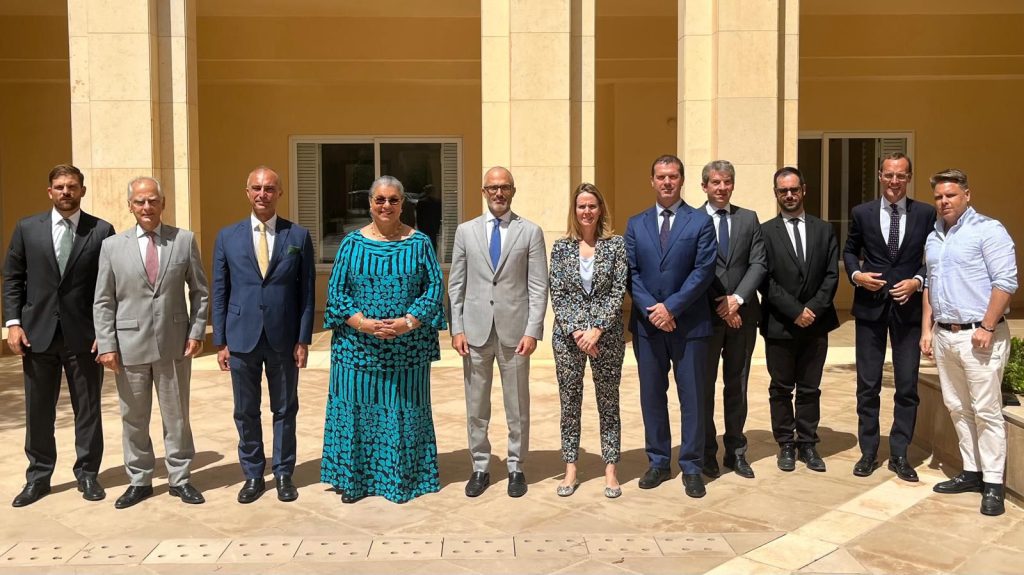
The European Union Mission to Libya hosted a meeting bringing together the Special Representative of the UN Secretary-General, Hanna Tetteh, with the ambassadors of EU member states to discuss the elements of the political roadmap she presented in her briefing to the Security Council last August. During the meeting, Tetteh emphasized the importance of “structured dialogue” as an opportunity for Libyans to actively participate in the political process, while the ambassadors renewed their full support for this roadmap. The attendees also stressed the necessity of unifying regional and international efforts to ensure the success of the political path, underscoring the importance of maintaining stability and avoiding security escalation in Libya.
- An analytical report published by the international news agency Pressenza highlighted what it described as Libya opening new horizons in global diplomacy at the end of last August, considering its participation in the 9th Tokyo International Conference on African Development (TICAD9) to reflect its desire to assume a different position on the international stage. The report, which was followed and translated by Al-Marsad newspaper, pointed to the meeting of Presidential Council member Abdullah Al-Lafi and the Dbeibah government’s acting Foreign Minister, Al-Taher Al-Baour, with a number of senior Japanese officials, including Foreign Minister Takeshi Iwaya and Prime Minister Shigeru Ishiba, where they obtained concrete commitments related to education, human capital development, and technical cooperation. The two sides also discussed housing, digital security, and the reconstruction of destroyed cities.